Posts

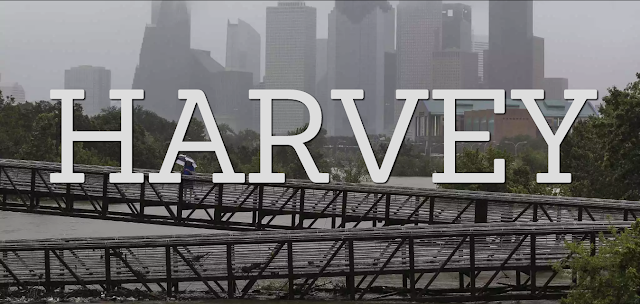
Houston Students, #Harvey Edition
Image
Thursday, 31 August, Starbucks. Home power is off and I needed to get out of the house and hear peoples’ voices and the sounds of the store machines, the aroma of hot coffee. The store wifi is off right now and that’s fine. I don’t need to be connected all the time. Multiple emails from the LSCS chancellor and NH president. They’re very assertive and reserved at the same time. Kingwood is a mess and I have to be grateful that, this time, NH has been a source of strength, providing shelters for nearly 200 residents. (c) Houston Chronicle, 2017 Of course, I’m concerned with the students. I know some live in Greenspoint with its regular flooding events. I’m hearing from former students that some of East Aldine has avoided massive flooding, while West Aldine has its regular high water. Much of Spring has avoided flooding. But I expect about half of my students to miss first week because of multiple disruptions, including transportation loss, displacement, other family priori...

Returning to the Topic -- The Idealism of Community College

Responding to a late 20th century ideal of universal access to higher education for all Americans, especially those without the financial means or academic credentials to compete for established four-year universities, the vision of community colleges in the United States promised open access for all community residents to accredited low-costs colleges with close ties to both business and secondary education. After World War II, the Truman Commission in 1947 argued for principles of democracy and expansion of universal higher education, positioned these institutions not only opportunity to higher education merely to economic improvement, but even a fundamental call for a liberalized citizenry: American colleges and universities must envision a much larger role for higher education in the national life. They can no longer consider themselves merely the institute for producing an intellectual elite; they must become the means by which every citizen, youth, and adult is enabled to encou...

Xenophobia, Islamophobia, and the Dominant Culture

A student has asked to collaborate with some research on the current dominant culture's enthusiastic and rewarded xenophobia. This is a topic we need to have on each college campus. Draft search: Overview of sociology and xenophobia: Kirik, Vladimir Alexandrovich, et al. "Conceptual and Methodological Research of Xenophobia in Social Sciences." Mediterranean Journal of Social Sciences 6.4 (2015): 183. Love, Erik. "Islamophobia in the West: Measuring and Explaining Individual Attitudes." Contemporary Sociology: A Journal of Reviews 44.2 (2015): 213-215. Good reference to Edward Said's theory of orientalism Hassan, Ibrahim Haruna. "Orientalism and Islamism: A Comparative Study of Approaches to Islamic Studies." Arts Social Sci J 6.91 (2015): 2. and original from Said: Said, Edward.  Orientalism . New York: Penguin, 1995. Print. [I'll be very disappointed if the LSC Library doesn't have this.] America as a racist/xeno...

Stroke

Image
The problem was first asking the demand for my coffee shop and was confused. But I put it away and then I noticed I couldn't type anything on the PC. I called my dad in North Carolina, not for that he could possibly help us in Houston, but perhaps I was thinking that my dad alone has enough times with emergency that I could have an empathy. The conversation with him was a jumble and I could hear the mixture of his impatience and concern. I then called my best friend, a nurse, and his conversation sent me to get to the ER. I should have made the idea already -- the symptom was obviously. The brain is ironically a great amazing of the star dust made of miracles, firing neurons that both sympathetic and parasympathetic breaths us our heart millions away without thinking, and designing and playing a Chopin etude. Yet as miracle as this the brain, it is so sensitive, so frailty, so that gelatin we sapiens  keeps us so closely to what keeps us ... stop. 16th Century Medical Text B...

Working Class Latinos Invisibility in the American Community College -- Part 2

Image
Part 1 Marginalization and the Rhetorical ecology of Community College Latinos Though I believe that the site of the community college is one of the nation’s last hopes for a utopian system of equality, the reality is that most often it has adopted multiple practices of postcolonization that other state institutions have practiced for decades. One of these practices is the hidden and implicit labeling of Latinos as “other” for the college’s statistical means of reporting to the state. Lazaro Lima argues in his Latino Body that it was an early identification of Mexican Americans in an 1894 pseudo-ethnographic description that framed Mexicans as “other” because of physical markers, “savage” traditions, and so forth, that demarked these Americans as non-Americans. This otherness continues to this day, though now we must add the complications of limited education, literacy, class, language, and even the imagined reification of “documentation” to maintain this otherness. This weighs ...

Working Class Latinos Invisibility in the American Community College -- Part 1

Image
The narrative of most studies that deal with Latino education begin with a common narrative: citing national statistics of growth, discussing economic disparities between Latinos and Anglos, and low rates of college persistence. I choose to begin this discussion without these statistics for multiple reasons, the most important being one of identity, or the question of identity when institutions use terms such as “Hispanic” or “Latino” for their own administrative and budgetary purposes, most often accumulating such data without the explicit consultation with the students themselves.  Secondly, I will discuss in this chapter how -- though most students who are enrolled in the First Year Writing course (FYW) take the course in the nation’s community colleges -- the narrative of the community’s ethos is still detached from the identity of the community, especially as public institutions at all levels are being defunded in a neoliberal economy. This simultaneous ubiquity of the ...

Publics, Crowds, Middle- and Working Class -- Mindless and Depraved

Image
The “mindless and depraved” refer not to anyone in particular. Richard Butsch has an interesting introduction in his book The Citizen Audience: Crowds, Publics, and Individuals and I need to spend more time in the book itself. Consider these few notes as a summary of his argument, how socio-economic class identifies itself (or has its identity crafted) in the social sphere. This tension between classes can explain how some in the college institution see community college students as mindless and depraved crowds instead of intellectual publics, thus shifting attention and resources from the needs of the community to the skills of the few who meet the expectation of administration and faculty middle class ethos. By seeing the multicultural student's body as depraved and "other" (though Butsch doesn't address Said's orientalism), the tension exhibited in the passive-aggressive monitoring of the college student's body by the dominant-culture mind can be expla...